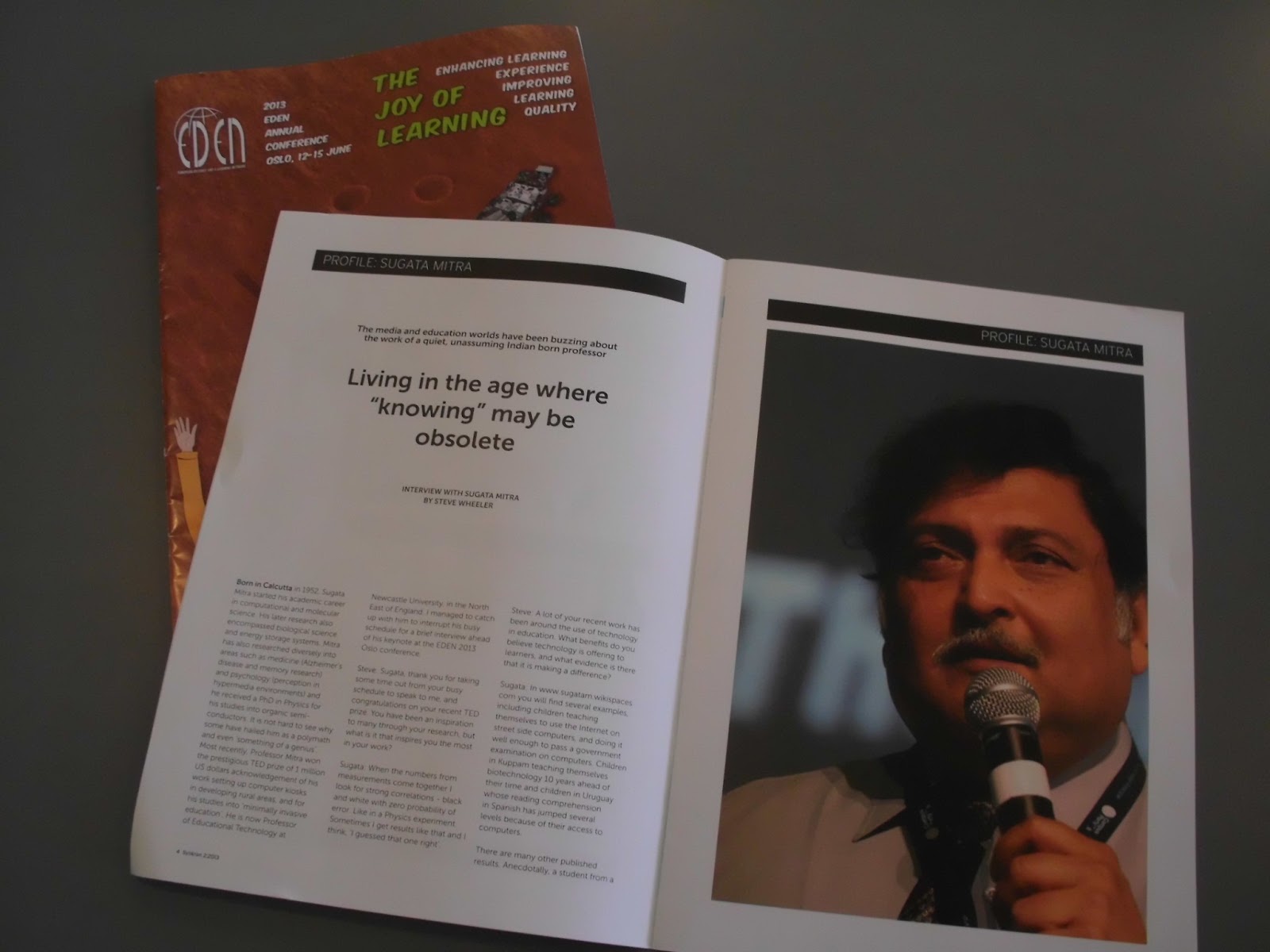
This morning, here in Oslo, it was all about the kids. And why not? Too often we gather to discuss education, to expound on learning theories and to congratulate ourselves for our pedagogical prowess, and yet we miss the crucial element, the context which should be central to everything we do. The learner. Where is the learner voice at learning conferences? This was addressed today at EDEN, and I'm glad I was there to witness it. Kids are generally honest in their opinions, so if you want to know how well a school is doing, ask them. Ask them out of earshot of the teachers, and off the record, and they will tell you.
During the plenary opening session we heard from several frank young students about their experiences at school. It was not good news for the Norwegian education system. One student said 'I don't want my own children to experience what I went through at school'. Another opined 'The way school is structured doesn't enable students to find each other. It is too structured'. A third simply said quite bluntly 'school is boring'. I would image that the same sentiments could be expressed by school learners the world over. It's important to qualify these comments in the context of this year's
EDEN Conference, the title of which is: ' The Joy of Learning: Enhancing Learning Experience, Improving Learning Quality.'
Why are students' experience so poor in most state run schools?
Friedrich Nietzsche once suggested that education in state run schools is bad for the same reason cooking in large canteens lacks quality. One size patently does not fit all, and one of the students highlighted this, calling the standard student 'a myth'. He was right, and this message resonated around the auditorium. We have been teaching this way in schools for years, and it is about time it stopped, was their message. It was a refreshing start to the event, one that challenged us all, and made us think about the future of education.
The rest of the conference will now have to - be required to - focus on what we need to do to change the current situation in so many schools around this planet. What will we do to make lessons 'less boring'? More importantly, what can be done to ensure that learners are more engaged? Children cannot vote with their feet in compulsory education, but they can vote with their minds. If we as teachers, are not in the game, and do not convey enthusiasm, inspiration and excitement to our students, how will they become engaged? How can we turn them on to studying serious subjects, if we cannot get ourselves enthusiastic in the first place? How will technology supplement and support these processes? Is learning changing, and if so, what will need to be the changes we will have to make to accommodate these changes?
Read this blog over the next few days, and we as a blogging team will report to you from EDEN on what is being said, discussed, explored... and promised.... for the future of education.
Photo by Steve Wheeler